How it works
The four numbers that define the jet
Compressed gas accelerates a thin liquid stream through a narrow nozzle. Our device manuals put the mixture particles at 50-80 microns, smaller than a follicular opening, and the specification table caps spray velocity at 230 m/s. That pairing is the entire design intent: small enough to enter the follicle, fast enough to lift sebum, cutin and surface debris out of it without a blade.
Intensity isn't set by a power dial. Two variables do the work. Output pressure comes first, and our engineering archive gives a normal operating window of 0.3-0.6 MPa. Distance does the rest. Hold the pen 3-5 mm off the skin and you get a peeling effect; back off to 5-10 mm and three to five gentle passes read as rejuvenation instead. Angle matters too. Pencil grip, 45 to 90 degrees, and work diagonally like weaving or you will leave stripes.
Why oxygen, and what to claim carefully
Cutibacterium acnes, the organism tied to acne, is described in the literature as an anaerobe that colonises the pilosebaceous unit (see the Janus-Faced Bacterium review on PubMed Central). The design rationale is that a cleared, oxygen-flooded follicle becomes a poorer home for it. Treat that as mechanism, not a proven clinical endpoint. Needle-free delivery is the better-documented half: a short review by Iannitti, Capone and Palmieri in Minerva Chirurgica (2011) tested a high-pressure oxygen jet on 20 volunteers and reported that it delivered a topical anaesthetic effectively before injection.
Gas path and controls
Two supplies feed the handpiece, switched by a rocker valve: an onboard compressor for routine work, or an external medical oxygen cylinder when a protocol leans on oxygen specifically. The two stages upstream of that 0.3-0.6 MPa window are worth separating. On cylinder mode our manual sets the oxygen control panel to send out 0.8-1.2 MPa, and the machine's own adjusting valve then drops that to the 0.3-0.6 MPa working range at the pen. Our training archive puts the onboard supply at 0-8 kg of output pressure, which covers the same range with no cylinder regulator in front of it, and the specification table rates the platform for 24 hours continuous working. Gauges show input pressure, stored internal pressure and output pressure separately, so an operator can quantify a session rather than guess at it. CPC quick-connect fittings handle the pipe changes. A foot pedal triggers the spray, which is why you position the handpiece first and press second.
Applications
Where OJ-01 fits, and where it doesn't
Our archive lists the honest indication set: deep pore cleansing, hydration and nutrient replenishment, oily and congested skin, folliculitis, and general tone and texture work. It also flags the jet as pre- and post-procedure skin prep, clearing epidermal debris, excess cutin and follicular mites before another device ever touches the face.
- Deep cleansing and follicular clearance on oily, congested skin
- Needle-free infusion of saline and water-soluble nutrient serums
- Brightening and texture refinement across a maintenance course
- Pre-treatment prep and post-treatment surface cooling around energy-based sessions
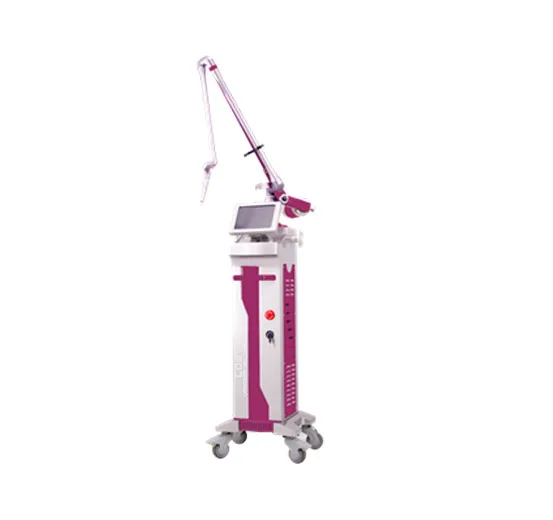
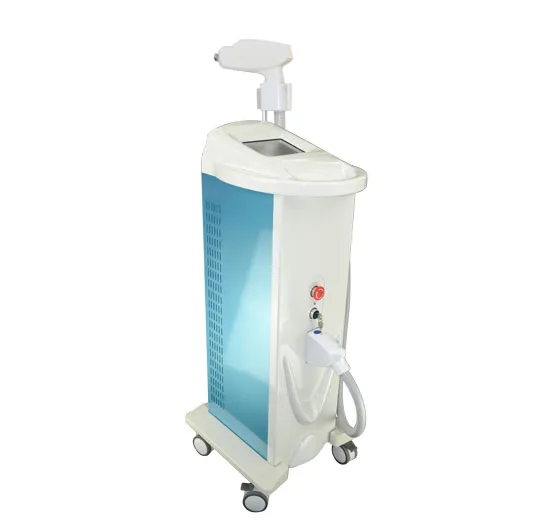
What it is not: a resurfacing device. Pitted or atrophic scarring needs ablative or fractional energy, so route those cases to the CF-01 CO2 fractional laser or the gentler EF-01 fractional laser. Inflamed active acne usually answers better to a light platform such as the PE-01 HPT E-Light, with the jet running alongside as the cleansing step. Our acne and acne scars page sets out how those roles divide up.
Key advantages
What the hardware actually buys you
- Dual gas source. The onboard compressor means a clinic isn't hostage to cylinder logistics, and the oxygen inlet is still there when you want it.
- Separate pressure gauges. Input, internal reserve and output each get their own display, so settings stay repeatable between operators instead of living in one person's hands.
- Cooling sized for duty cycle. Our documentation describes a supercooling arrangement meant to hold performance stable across consecutive sessions. That's the realistic failure mode in a busy room.
- Interchangeable tips. Multi-outlet heads cover large areas quickly; a single-outlet option exists for targeted work.
- Cheap consumables. Saline, serum, gas. No cartridge, no lamp, no crystal media to reorder.
Practical footprint: roughly 51 x 51 x 102 cm and about 36 kg net, running on AC 220V/50Hz or 110V/60Hz with a 6A maximum fuse rating. Site it in a clean room at 5-35 degrees C, relative humidity at or below 85 percent, with around 30 cm of ventilation clearance behind the unit. One siting rule applies only to the oxygen mode, and our manual is blunt about it: keep the unit away from radiators, hot vent pipes and any other fire or heat source, forbid smoking outright, and have fire protection in place in any room where the machine is connected to an oxygen apparatus - the same no-smoking, no-open-flame, keep-it-free-of-oil-and-grease discipline codified in OSHA's oxygen standard. Before the cylinder valve is opened, confirm every fitting is connected correctly and tightly, because leaked oxygen accumulates. None of this constrains compressor mode, which is one more reason clinics run the onboard supply for routine work.