[email protected]  ·  +86 133 2121 6666 FDA / CE / RoHS / SGS certified
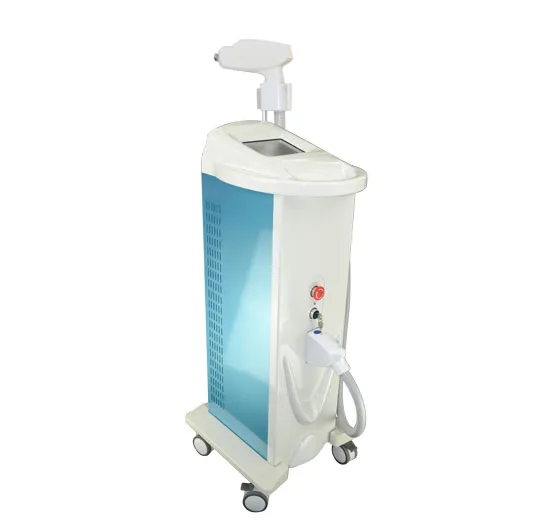
Pmise RF-01 Radio-frequency skin tightening machine
RF Skin Tightening

Pmise RF-01

Radio-frequency skin tightening machine

RF-01 is a radio frequency platform for skin tightening. No laser, no flashlamp, no melanin target. That last point is why most buyers put it next to their light-based equipment rather than instead of it.

The architecture is simple to describe. One handpiece, two conduction modes, five interchangeable tips. Bi-polar tips (25 mm and 45 mm) run current between two closely spaced electrodes, so heat stays shallow; our device manuals put the bi-polar working depth at roughly 5 mm, which covers epidermis, dermis and the top of the subcutaneous layer. Mono-polar tips (15 mm, 25 mm, 45 mm) push current through the body toward a return patch, and the heat goes deeper. That one design choice is what lets a single unit carry both a face menu and a body menu.

Output sits at 2.64 MHz with 120 W maximum. Pulse width and interval are each adjustable from 1 to 20 seconds, and the tip is contact-cooled to between -2 and 0 degrees Celsius. Those four figures explain most of what the machine can and can't do. The rest is operator technique. RF-01 is the workhorse behind our skin tightening solution.

How it works

Where the heat actually lands

Radio frequency is an electromagnetic field, not light. Drive it through tissue and water molecules in the dermis start moving; that friction is the heat source. Collagen contracts once it's warmed into the low-to-mid 40s Celsius, and that's the same-day tightening clients notice on the table. The durable change arrives later, through a wound-healing sequence (inflammatory, proliferative, remodelling) that builds new collagen over the following weeks. Zelickson and colleagues documented the fibril-level version of this in Archives of Dermatology in 2004, reporting collagen fibrils with increased diameter and loss of distinct borders after RF exposure.

Because the energy receptor is water and not pigment, tissue colour barely enters the equation. Surface thermal control does. That's the whole job of contact cooling: hold the epidermis near freezing while the dermis climbs. Our engineering archive states the working window plainly. Around 40 to 41 C maintained for one to two minutes on facial skin, three to five minutes where skin is thick, and an epidermal end point that has to stay under 45 C. Cross that line and you aren't tightening anything. You're burning it.

Mode selection in practice

Bi-polar for face and neck. Mono-polar for body, with the return patch placed on the back when the abdomen is being treated. Dwell times separate the two as well: archive protocols run roughly 6 to 8 seconds per facial zone against 12 to 16 seconds on body zones, with a one to two second delay between shots. Body work is gridded, typically 100 to 225 cm2 fields, three passes, sessions spaced about a fortnight apart across four to six visits. The neck earns its own warning. Skin there is thin, it heats faster than anywhere else the handpiece touches, and the thyroid region stays off the treatment map.

What the settings will not do

Turning the dial up doesn't buy depth. Depth comes from electrode geometry and mode, so a hot bi-polar pass is still a shallow pass, just a riskier one. Compare tip configuration and cooling first when you evaluate RF platforms. Watt ratings second.
Applications

  • Wrinkle softening on the forehead, periorbital area, and lower face
  • Firming for mild to moderate laxity on face, neck and jawline
  • Body shaping passes on abdomen, arms, buttocks and thighs in mono-polar mode
  • Pore appearance and skin texture work as part of a rejuvenation course
  • Firming support alongside fat-reduction programmes

How RF-01 sits against the other platforms here

Selection usually comes down to naming the tissue problem correctly. Loose skin with intact surface texture is RF territory. Damaged surface texture, scars and deep photodamage are ablative work, which is where CF-01 CO2 fractional belongs, downtime included. For fractional resurfacing without ablation, EF-01 is the middle path. If the complaint is volume rather than firmness, RF is the wrong tool and SM-01 cavitation is the honest answer. Want RF combined with pulsed light in a single shot for vascular and pigment work? Look at MF-05 rather than adding a second standalone box.

A busy salon running back-to-back thirty-minute sessions cares about something else entirely: RF-01 has no consumable tips, so throughput doesn't burn money. This page is a technical reference for equipment buyers, not medical advice. Treatment decisions belong with a qualified practitioner.

Key advantages

  • Two conduction modes on one handpiece, so superficial facial work and deep body work don't need two machines or two rooms
  • Contact cooling at -2 to 0 C protects the epidermis on every pass, which widens the margin on thin skin
  • Five tip diameters, from 15 mm detail work to 45 mm body fields; swapping takes seconds
  • Adjustable 1-20 s pulse and 1-20 s interval, enough range to run the short facial rhythm and the long body dwell from one panel
  • Conductive gel is the only per-session consumable, which makes running cost easy for a distributor to quote
  • Melanin isn't a target, so protocols don't need reworking for darker Fitzpatrick types

None of that is exotic. RF tightening is a mature modality with decades of clinical literature behind it, and what you're buying is a clean implementation plus parts availability from our service team.

Specification

HandpieceRW-V
Treatment TipMono-polar: 15mm, 25mm,45mm;
Bi-polar25mm, 45mm
RF Frequency2.64MHz
RF Power120W (Max)
Power SupplyAC 220V 50Hz;AC 110V 60Hz
Insurance StandardMax10A
RF Width1-20S
RF Interval1-20S
Cooling Temperature-2℃~0℃
Input Power360W
Net Weight26kg
Gross Weight38kg
Dimensions (before packaged)51×51×104cm3
Dimensions (after Packaged)62×55.5×128.5cm3

Frequently asked questions

Who should not be treated with RF-01?

The exclusion list in our technical documentation is specific: implanted pacemakers or defibrillators, pregnancy, active herpes or broken skin in the treatment field, atypical moles or malignant lesions, poorly controlled diabetes or hypertension, epilepsy, phlebitis and clotting disorders, dermal filler material in the area, large metallic dental implants, and isotretinoin use within the past year. Metal jewellery comes off before the handpiece goes on. Train operators to screen before the gel, not after.

How many sessions do clients need, and how fast is anything visible?

Some tightening shows up on the day, because heated collagen contracts on the spot. It's modest, and it partly relaxes. The result worth selling comes from remodelling over the following weeks, so plan a course rather than a single visit. Body protocols in our archive run four to six sessions roughly a fortnight apart. Say that up front to clients. RF rewards consistency, not intensity.

Is RF safer than laser on darker skin?

For pigment-related risk, largely yes: RF has no chromophore to overheat, so post-inflammatory hyperpigmentation risk isn't driven by skin tone the way it is with light devices. Thermal injury risk hasn't gone anywhere though. The FDA's safety communication on radiofrequency microneedling covers a different device class, but its underlying warning transfers cleanly to any RF platform, since burns, scarring and fat loss are the reported harms when energy delivery goes wrong. Full tip contact, adequate gel, constant motion, and stop at the temperature end point.

What should I verify before signing off on delivery?

Ask for the electrical safety and EMC test reports, and check which edition of IEC 60601-1 the unit was assessed against. Confirm the mains configuration matches your market before shipment, because the platform is built for either 220 V 50 Hz or 110 V 60 Hz and that isn't a change you want to improvise on site. Count the tips against the packing list: all five, plus the return patch. Request the quality-system certificate covering the manufacturing site. Then get spare handpiece lead time in writing. Contact us and we'll send the compliance file that applies to your country.

Can one operator run face and body treatments in the same shift?

Yes, and that's the usual pattern. Mode and tip changes take seconds, and the only reset between clients is cleaning the tip and reloading gel. Room time limits you here, not the machine.

Ask about the Pmise RF-01

Get the full datasheet, certification pack and distributor pricing within one working day.